-medium.webp)
Table of Contents
Cross-border marriage between Nepal and India is not a novelty. It is a living continuum of shared civilization, geography, and kinship. The open frontier between the two nations has cultivated matrimonial alliances for centuries. Families span both sides of the border. Traditions overlap. Rituals resonate.
Yet while culture flows freely, legal compliance does not. A cross-border marriage demands procedural precision. Documentation, court appearances, verification, and registration must be navigated carefully. Romance may be spontaneous. Law is not.
2. Historical Ties Between Nepal and India
2.1 The Open Border Tradition
Nepal and India share one of the most distinctive geopolitical arrangements in South Asia an open border. Citizens travel, work, and reside across territories without visa formalities. This permeability naturally extends to matrimonial unions.
Generations have intermarried across Terai towns, hill communities, and metropolitan centers. These marriages are less “international” and more familial extensions.
2.2 Cultural Interconnectedness
Language, religion, caste structures, and festivals mirror one another. From Mithila traditions to Kumaoni rituals, the sociocultural fabric is interwoven. Such shared ethos simplifies social integration after marriage. However, administrative formalities remain sovereign.
3. Legal Framework Governing Cross-Border Marriage in Nepal
3.1 Constitutional Foundations
Nepal recognizes marriage as a civil contract between consenting adults. The governing legal instrument is the Civil Code 2017. It outlines age, consent, and prohibitions.
Marriage between a Nepali and a foreign national is lawful, provided procedural prerequisites are satisfied.
3.2 Role of the District Court
Court marriage in Nepal is solemnized before the District Court. Both parties must be physically present. Identity documents, single-status certificates, and witness verification are required. Upon approval, a marriage certificate is issued, legally binding under Nepali jurisdiction.
4. Legal Framework Governing Cross-Border Marriage in India
4.1 The Special Marriage Act
India’s Special Marriage Act governs civil marriages between individuals of different nationalities or religions. It requires a 30-day notice period before solemnization.
Transparency is embedded in the process. Objections can be raised during the notice period.
4.2 Marriage Registration Rules
Post-solemnization, the marriage must be registered to gain legal recognition. Documentation varies slightly across Indian states, but core requirements remain consistent.
5. Types of Cross-Border Marriages
5.1 Court Marriage in Nepal
This is the most secure and legally robust route. It involves filing an application, verification, and formal declaration before a judge. Efficiency and clarity define this pathway.
5.2 Traditional Religious Marriage
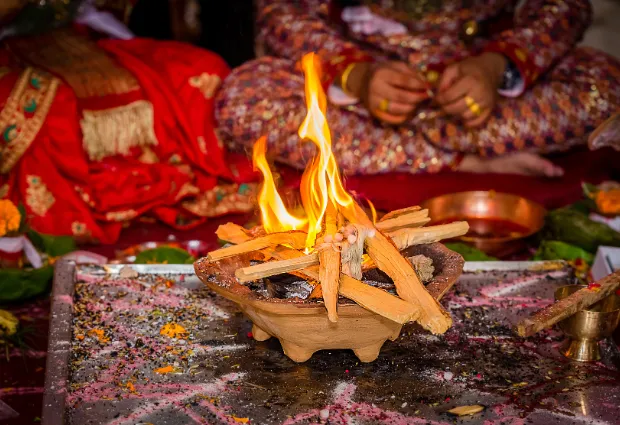
Couples may opt for Hindu, Buddhist, or other religious ceremonies. However, ritual solemnization alone is insufficient for legal standing. Registration is imperative.
6. Eligibility Criteria for Nepal–India Marriage
6.1 Age Requirements
Both Nepal and India mandate that the bride must be at least 20 years old (Nepal) and 18 (India), and the groom must meet respective statutory age requirements.
6.2 Marital Status Verification
Both parties must be unmarried, divorced, or widowed. Proof is non-negotiable. Affidavits and official records must corroborate claims.
7. Required Documentation
7.1 Documents for Nepali Citizens
-
Citizenship Certificate
-
Birth Certificate
-
Unmarried Status Certificate
-
Passport (if applicable)
-
Witness identification
7.2 Documents for Indian Citizens
-
Passport or Aadhaar
-
Birth Certificate
-
Single Status Affidavit
-
No Objection Letter from Embassy (in Nepal)
Documentation must often be notarized and, in certain instances, authenticated by the respective embassy.
8. Step-by-Step Court Marriage Process in Nepal
-
Submit application at District Court.
-
Provide all required documentation.
-
Verification by court officials.
-
Appearance before judge.
-
Issuance of marriage certificate.
The process may take 2–7 working days if documentation is impeccable.
9. Marriage Registration Procedure in India
Under the Special Marriage Act:
-
File notice with Marriage Officer.
-
Wait 30-day objection period.
-
Appear with three witnesses.
-
Receive marriage certificate.
Time-sensitive and document-intensive.
10. Citizenship Implications After Marriage
10.1 Nepali Citizenship by Naturalization
A foreign woman married to a Nepali man may apply for naturalized citizenship, subject to legal compliance.
10.2 Indian Citizenship Considerations
India does not grant automatic citizenship upon marriage. Long-term visa and naturalization pathways must be pursued.
11. Visa and Residency After Marriage
Though the border is open, long-term residency documentation may still be advisable. Registration with local authorities strengthens legal standing and prevents administrative complications.
12. Property Rights and Inheritance Laws
Property rights depend on the governing law of the country where assets are located. Marriage does not override statutory inheritance frameworks. Legal consultation is prudent when assets span jurisdictions.
13. Interfaith and Intercaste Cross-Border Marriages
Such unions may face societal scrutiny. Legally, however, both Nepal and India uphold the right to marry across caste or religion under civil law provisions.
14. Common Legal Challenges and How to Avoid Them
-
Incomplete documentation
-
Misinterpretation of residency rules
-
Delays due to embassy attestation
Preparation neutralizes most complications.
15. Timeframe and Cost of Cross-Border Marriage
In Nepal, court marriage may conclude within a week. In India, at least 30 days are required due to notice periods.
Costs vary depending on legal assistance and document authentication fees.
16. Role of Legal Professionals in Cross-Border Marriage
Legal practitioners ensure procedural fidelity. They draft affidavits, coordinate with courts, and mitigate risk. Cross-border marriages benefit significantly from professional guidance.
17. Apostille, Embassy, and Attestation Requirements
Certain documents may require apostille certification or embassy attestation, particularly for use in third countries. Precision here prevents bureaucratic stagnation.
18. Divorce and Separation in Cross-Border Marriages
Jurisdiction depends on residence and place of marriage registration. Legal separation across borders can be complex and demands cross-jurisdictional expertise.
19. Child Custody and Nationality of Children
Children born to such unions may acquire citizenship based on parental nationality and applicable law. Registration at both embassies may be advisable.
Custody disputes follow the family law of the jurisdiction where proceedings are initiated.
20. Social and Cultural Considerations
Marriage is not merely legal it is communal. Families must reconcile customs, expectations, and traditions. Communication and mutual respect are foundational.
Cross-border marriage blends heritage. It is synthesis, not compromise.
Frequently Asked Questions (FAQs)
1. Can an Indian citizen marry in Nepal legally?
Yes. Court marriage in Nepal is legally valid if all documentation requirements are fulfilled.
2. Is embassy verification required?
Often yes, especially for single-status verification and identity authentication.
3. How long does court marriage in Nepal take?
Usually between 2 to 7 working days, depending on document readiness.
4. Is a religious marriage sufficient?
No. Registration is essential for legal recognition.
5. Does marriage grant automatic citizenship?
No. Citizenship requires a separate legal process.
6. Can property be jointly owned?
Yes, subject to property laws of the country where the asset is located.
7. What happens if one partner is previously divorced?
Official divorce decree must be presented.
8. Is the marriage certificate valid internationally?
Yes, though apostille or attestation may be required for third-country use.
Disclaimer: This article is for informational purposes only and shall not be construed as legal advice, advertisement, personal communication, solicitation or inducement of any sort from the firm or any of its members. The firm shall not be liable for consequences arising out of any action undertaken by any person relying on the information provided herein.
Recent Publications