Table of Contents
This guide covers every scenario (Nepali–Nepali, Nepali–foreigner, two foreigners), required documents, where to apply, timelines, fees, aftercare (name change, citizenship update, foreign legalization), and common pitfalls.
1) How To Register a Marriage in Nepal?
-
Court marriage (District Court) — strongly recommended when at least one partner is a foreigner, or if you want a universally accepted, legally airtight record. Fast and standardized.
-
Ward / Municipality registration — common for Nepalis marrying within Nepal; handled by local offices (ward/municipality). Good for local administrative updates (household register, citizenship updates).
-
Embassy / Consular marriages — some foreign nationals prefer to handle embassy formalities first then register in Nepal; both can be coordinated.
2) Legal Basis/Governing Laws
Marriage registration and related formalities are carried out under provisions of the Civil Code (Muluki Civil Code) and relevant local rules. Courts and municipal authorities implement the procedures.
Note: Officials will ask for documents and follow processes that implement those laws. Small procedural details can vary by district/municipality—always confirm local checklists.
3) Documents you’ll typically need (by scenario)
A. Nepali citizens (both partners)
-
Original and copy of Citizenship Certificates (or equivalent national ID).
-
Filled marriage registration form (available at ward/municipality or court).
-
Passport-size photos (usually 2–4).
-
Two witnesses’ names & signatures (some wards require presence).
-
Proof of marital status if previously married (divorce decree or death certificate of spouse).
-
Rental/household details (for ward record; varies).
B. Nepali + Foreigner (or foreigner + foreigner)
-
Passports of foreign partner(s) with entry/visa stamps.
-
Valid visas / proof of legal entry (showing 15-day stay is often required for court marriage).
-
Single-status certificate / Affidavit of eligibility to marry (issued by foreigner’s home country). Must be notarized and usually authenticated by the foreign embassy in Nepal.
-
Police clearance or local character verification may be required in some districts.
-
Birth certificates (if requested).
-
Passport-size photos.
-
Application form (court or ward).
-
Translations (English ↔ Nepali) certified by a notary if documents are in other languages.
C. If a party is previously married or a minor
-
Divorce decree or spouse’s death certificate (for widows/widowers).
-
If minor: parental consent + court permission (marriage below legal age is legally restricted).
4) Step-by-step: Court Marriage (recommended, esp. for foreigners)
-
Confirm eligibility & prepare docs. Foreigners usually must show 15 days’ presence in Nepal prior to court marriage—bring entry stamp, hotel receipts, flight tickets.
-
Draft and sign a joint application for marriage registration. Many courts have a standard form — you can get it at the court registry.
-
Submit application with all documents to the District Court where you intend to marry (often where one partner lives or where the wedding took place).
-
Preliminary verification — court staff will verify identity and documents; embassy attestations may be checked.
-
Hearing / oath — judge or court official will typically question both parties briefly to confirm free consent and legal capacity. Parties sign the register and give an oath.
-
Payment of court fee — nominal; varies by district (often minor, e.g., a few hundred to a couple thousand NPR).
-
Marriage Certificate issued — printed and signed by court; bilingual copies (Nepali/English) often available. This is an official, widely accepted marriage record.
Timeline: Many courts can issue the certificate the same day after hearing; some may finalize within 1–7 days depending on workload and verification needs.
5) Step-by-step: Ward / Municipality Registration (for Nepalis)
-
Collect the marriage registration form at your local Ward Office or Municipality.
-
Fill the form and attach citizenship copies, photos, any prior proof (divorce/widow documents if applicable).
-
Submit the application; the ward office may require witness presence or local verification.
-
Pay the administrative fee (small).
-
Get registered the ward issues a Marriage Registration Certificate (useful for local records, citizenship updates, family register).
Timeline: Usually same day to a few days (local verification dependent).
6) Fees & costs (estimates confirm locally)
-
Court marriage fee: nominal (varies by district) — usually NPR 500–3,000 range for processing and certificate printing.
-
Ward/municipality fee: lower — often NPR 200–1,000.
-
Document translation / notarization / embassy authentications: NPR 1,000–10,000+ depending on number of docs and embassy fees.
-
MOFA authentication (if needed for foreign use): separate fee.
Prices change; always check with the specific court/ward or your embassy for exact amounts.
7) Special cases & extra steps
A. If one or both partners are foreigners
-
Embassy authentication of single-status certificates is commonly required.
-
Some embassies provide a “no objection to marry” letter obtain that early.
-
Court marriage is preferred for cross-border recognition.
B. Registering a marriage performed abroad
-
You can register a foreign marriage in Nepal submit: foreign marriage certificate, translation (notarized), passport copies, and embassy authentication. The District Court or Ward will guide exact steps.
C. Religious / traditional ceremonies vs legal marriage
-
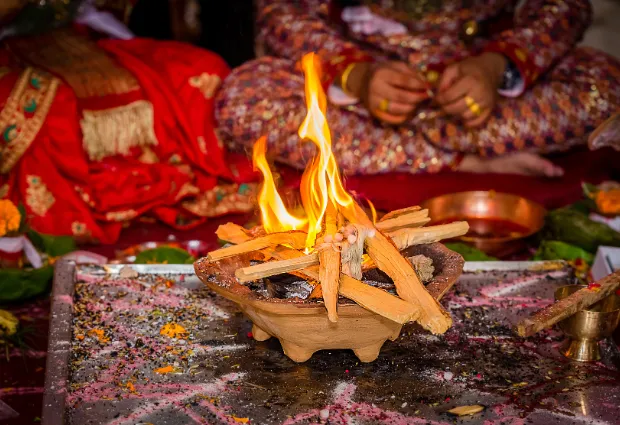
Traditional ceremonies (religious rites) may not automatically create a legal marriage record. You must register the marriage with court or ward to get legal recognition.
8) After marriage practical follow ups
1. Update Citizenship / ID / Household Register
-
Nepali citizens may need to update the Lekhpal / Ward household records and citizenship details (if surname changes or marital status shown). Follow local ward procedures for name updates on citizenship booklets.
2. Passport & Visa updates for foreigners
-
Update passport name changes or spouse info through the foreigner’s embassy. For family visa or dependent visas, contact Immigration Office.
3. Authentication for foreign use
-
If the foreign partner needs the Nepali marriage certificate for visa/family-immigration abroad, you’ll often need:
-
Court/ward marriage certificate
-
Ministry of Foreign Affairs (MOFA) authentication in Nepal
-
Foreign embassy/legalization (or apostille if the destination country accepts Hague Apostille).
NOTE: Nepal is not a Hague Apostille Convention member (as of typical practice) so many countries require MOFA + embassy legalization (but check the specific embassy rules they vary). If you plan to use the certificate abroad, verify with the destination country’s embassy.
-
9) Common pitfalls & how to avoid them
-
Not authenticating foreign docs early — embassy and MOFA steps take time; start early.
-
Trying to use only a religious ceremony — no legal standing until registered.
-
Missing the 15-day stay requirement for some foreign marriages — check the court’s rule in that district.
-
Using unverifiable single-status certificates — get them notarized and embassy-verified.
-
Assuming all embassies treat documents the same — embassy/legalization steps differ; confirm with the specific embassy.
-
Not updating IDs & citizenship after marriage — leads to problems with bank accounts, property, schooling, inheritance.
10) Model checklist you can save / print
Required (basic):
-
Passport / Citizenship (both partners) original + photocopy
-
Two passport photos each
-
Filled marriage registration form (court or ward)
-
Single status proof / divorce decree / death certificate (if applicable)
-
Proof of address / hotel receipts (for foreigners proving stay)
-
Witness details (names, IDs)
-
Translation & notarization of foreign docs (if needed)
-
Fees in cash / payment proof
-
MOFA & embassy authentication (if planning to use abroad).
How do I register my marriage in Nepal?
- Apply at District Court (court marriage) or local Ward/Municipality (ward registration) with IDs, photos, and proof of marital eligibility. After verification and signing, you get the marriage certificate.
Do foreigners need to stay a minimum period to marry in Nepal?
- Many courts expect evidence of presence (commonly 15 days) before court marriage by a foreign national. Check the specific district court.
Can I register a marriage performed abroad in Nepal?
- Yes, present the foreign marriage certificate, translations, embassy authentication, and ID documents to register in Nepal.
How long does marriage registration take?
- Often same day to a few days; embassy/document authentication takes longer.
Do I need to authenticate the Nepali marriage certificate for foreign visa/immigration?
- Usually yes, MOFA authentication followed by the destination country’s embassy legalization (or apostille if accepted). Confirm with the foreign embassy.
Disclaimer: This article is for informational purposes only and shall not be construed as legal advice, advertisement, personal communication, solicitation or inducement of any sort from the firm or any of its members. The firm shall not be liable for consequences arising out of any action undertaken by any person relying on the information provided herein.
Recent Publications